




Stories
Beyond Décor: The Investment Case for Fine Amethyst

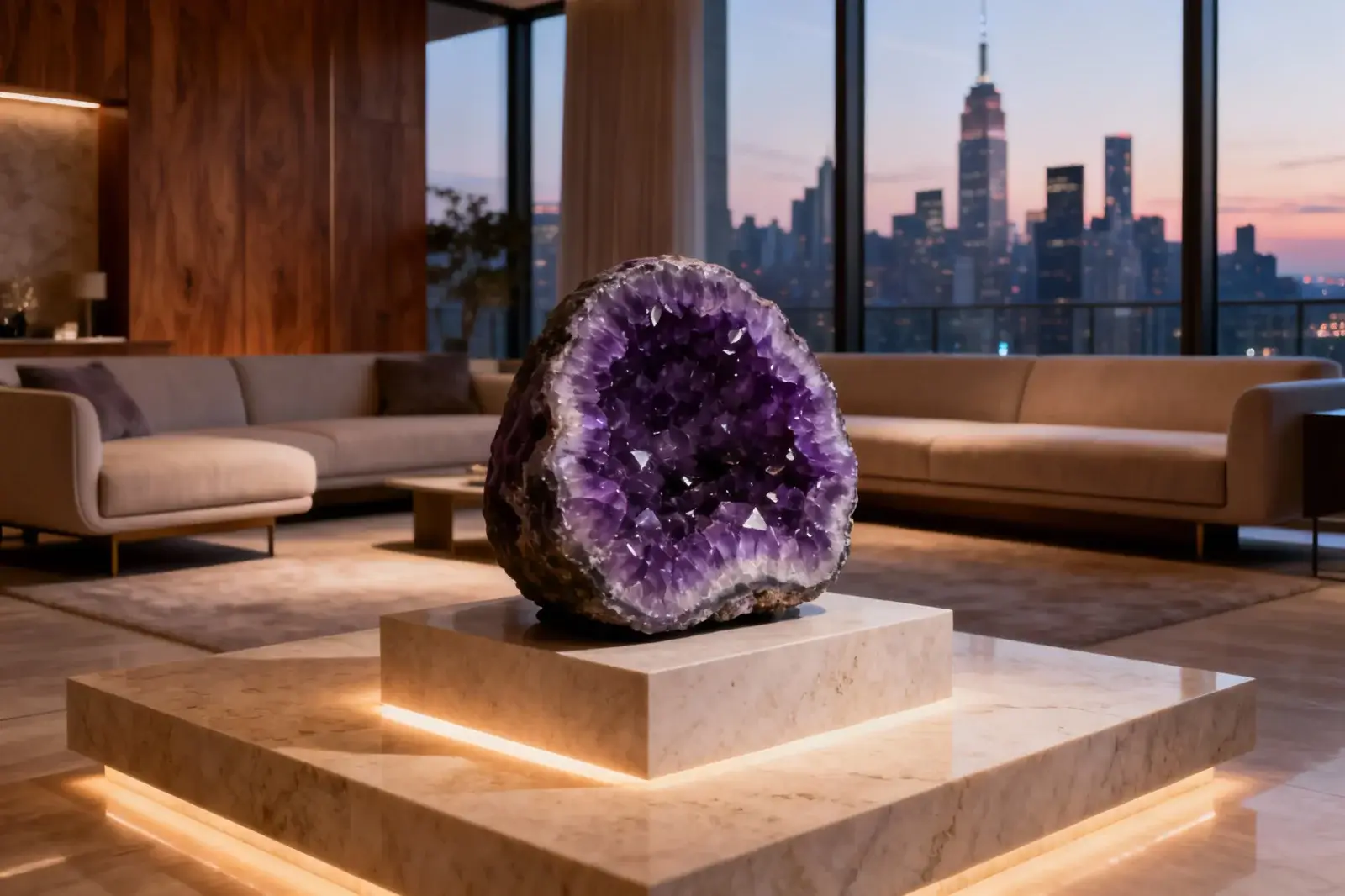
I’ve been asked more than once whether amethyst is a genuine investment or just a pleasant story to tell. It’s a reasonable question. The honest answer is: it depends entirely on what you acquire.
Fine minerals — and I mean genuinely fine, the museum-quality kind — have moved into what serious collectors and some wealth managers now call “passion assets.” Holdings that offer something a stock certificate simply cannot: an aesthetic dividend. Something that sits in your home, holds its value, and looks extraordinary while it does.
That shift has taken time. But it’s real.
The Rise of “Natural Art”
For decades, the fine mineral market was a specialist world — dealers, geologists, and a small community of serious collectors. Then the auction houses arrived.
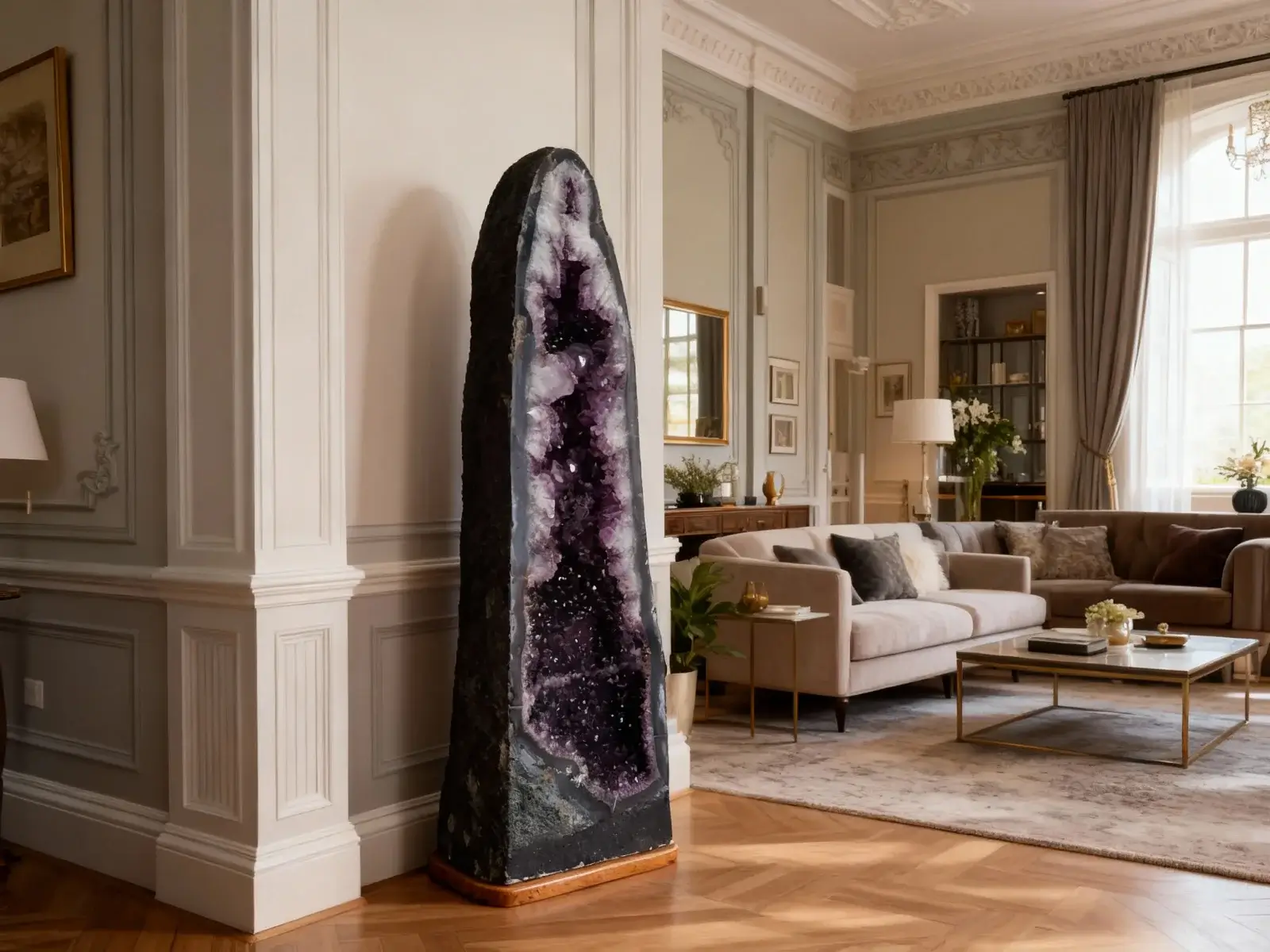
When Sotheby’s and Christie’s began running dedicated natural history sales, the prices stopped being niche. A pristine geode, it turned out, commands the same kind of attention as contemporary sculpture. Because it is sculpture — formed over millions of years, unrepeatable, impossible to commission.
And as interest in biophilic design has grown, so has the recognition that these pieces belong in private homes. Not just museums.
Defining an “Investment Grade” Amethyst
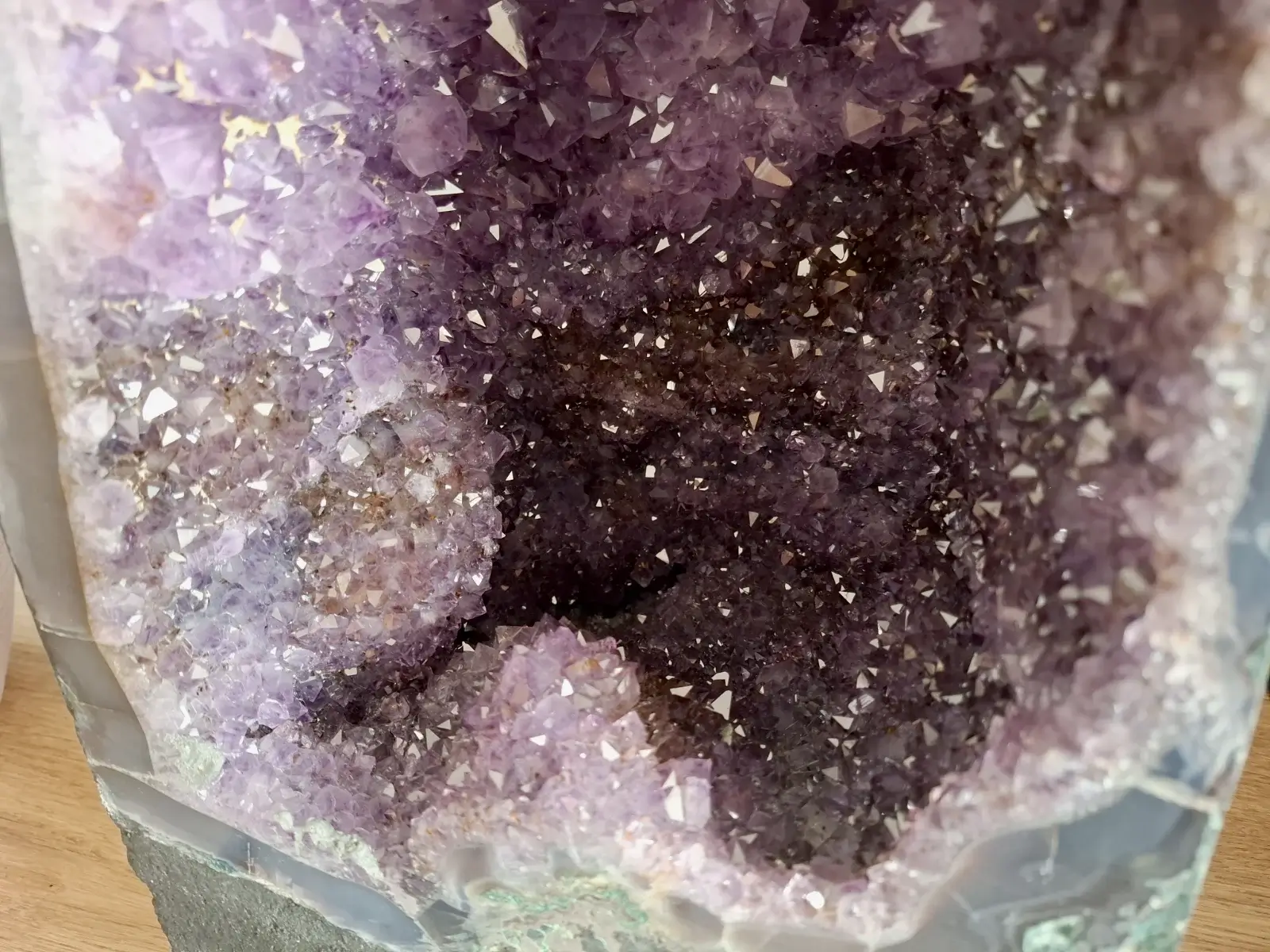
Not all amethyst qualifies. That’s the first thing to understand. The gap between a decorative souvenir and an investment-grade specimen is significant — and the difference comes down to four things.
- Colour Saturation: Colour is the primary value driver. The specimens serious collectors pursue have a deep, concentrated purple — what dealers often call “grape jelly.” Not pale lavender. Not medium violet. The saturated, almost-blue-tinted purple that’s genuinely rare, and genuinely difficult to find at size.
- Architectural Integrity & Size: Crystal points should be pristine. Undamaged. A large geode commands a premium, but size without quality means nothing. A smaller, perfect piece is always the better acquisition — and every serious buyer I’ve spoken with would agree.
- Provenance: Origin matters. The mines of Uruguay — particularly the Artigas region — and parts of Brazil produce the world’s finest specimens. A piece with traceable provenance carries a measurable premium, just as it would in the art market.
- Presentation & Finishing: The cut along the geode’s rim, the quality of the stand — these aren’t cosmetic details. A refined, properly engineered base transforms a geological specimen into a finished object of design. Collectors notice. And so does anyone who walks into the room.
The Concept of the “Aesthetic Dividend”
Most assets are abstract. A gold bar sits in a vault. A crypto position is a string of code on a screen. Neither does anything interesting while it waits.
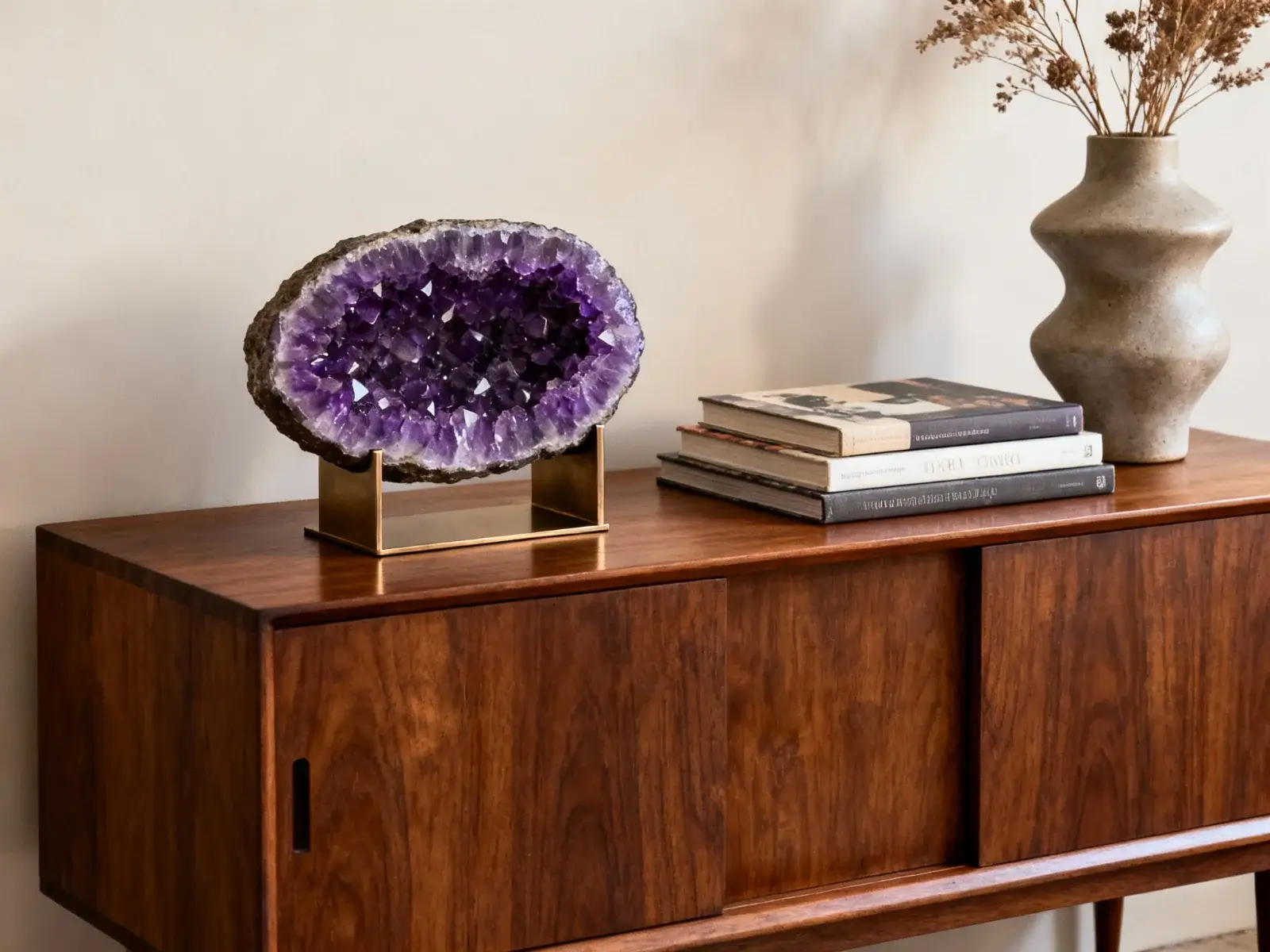
A fine amethyst pays an aesthetic dividend. Every day. It changes as the light changes — different in the morning than in the afternoon, different in lamplight than in sun. It anchors a room.
The comparison I find most useful is furniture. A €5,000 designer sofa depreciates from the moment you use it. Ten years later, it’s a used sofa. A museum-quality amethyst purchased for the same amount doesn’t wear out. It doesn’t go out of style. Ten years on, it’s likely more scarce than when you bought it — and the room it occupies still benefits from it daily.
The Reality Check: Risks and Patience
This is worth saying plainly: fine amethyst is not a liquid asset. It’s not designed for quick returns. If you’re expecting the mineral market to behave like equities, you’ll be disappointed.
- Liquidity: You can’t sell a geode the way you’d sell gold. Finding the right buyer for a unique, high-value piece takes time — sometimes months. Think of it more like selling a piece of fine art than a commodity.
- The Nuance of Valuation: Unlike gold, there’s no fixed daily rate. Each piece is valued on its own merits — colour depth, crystal perfection, structural balance. Market baselines exist, but the final figure depends on tangible quality. I won’t pretend there’s a clean formula here — there isn’t. That said, experienced eyes can read a piece fairly quickly once you know what to look for.
- Condition Risk: Amethyst sits at 7 on the Mohs hardness scale — the same as standard quartz — but it isn’t indestructible. Crystal points can chip under careless handling. Damage affects future valuation directly. An investment-grade piece deserves proper placement and real care.
Buying with Intelligence
If you’re approaching this as a diversification strategy — a way to hold value in something tangible, outside stock market volatility — three principles apply.
- Quality over quantity: One exceptional, deep-purple geode is worth more, practically and financially, than ten mediocre ones. Buy the best specimen your budget allows. Always.
- Verify natural status: Dyed or heat-treated stones have no investment value. Authentic value lives in natural formation — the colour, the structure, everything exactly as it emerged from the basalt. Ask for documentation. Reputable sellers provide it without hesitation.
- Buy what you actually love: Because this is an illiquid asset, your primary return is the experience of living with it. If a piece earns the room — if it stops you mid-conversation when you walk past — that’s the one.
A Legacy in Stone
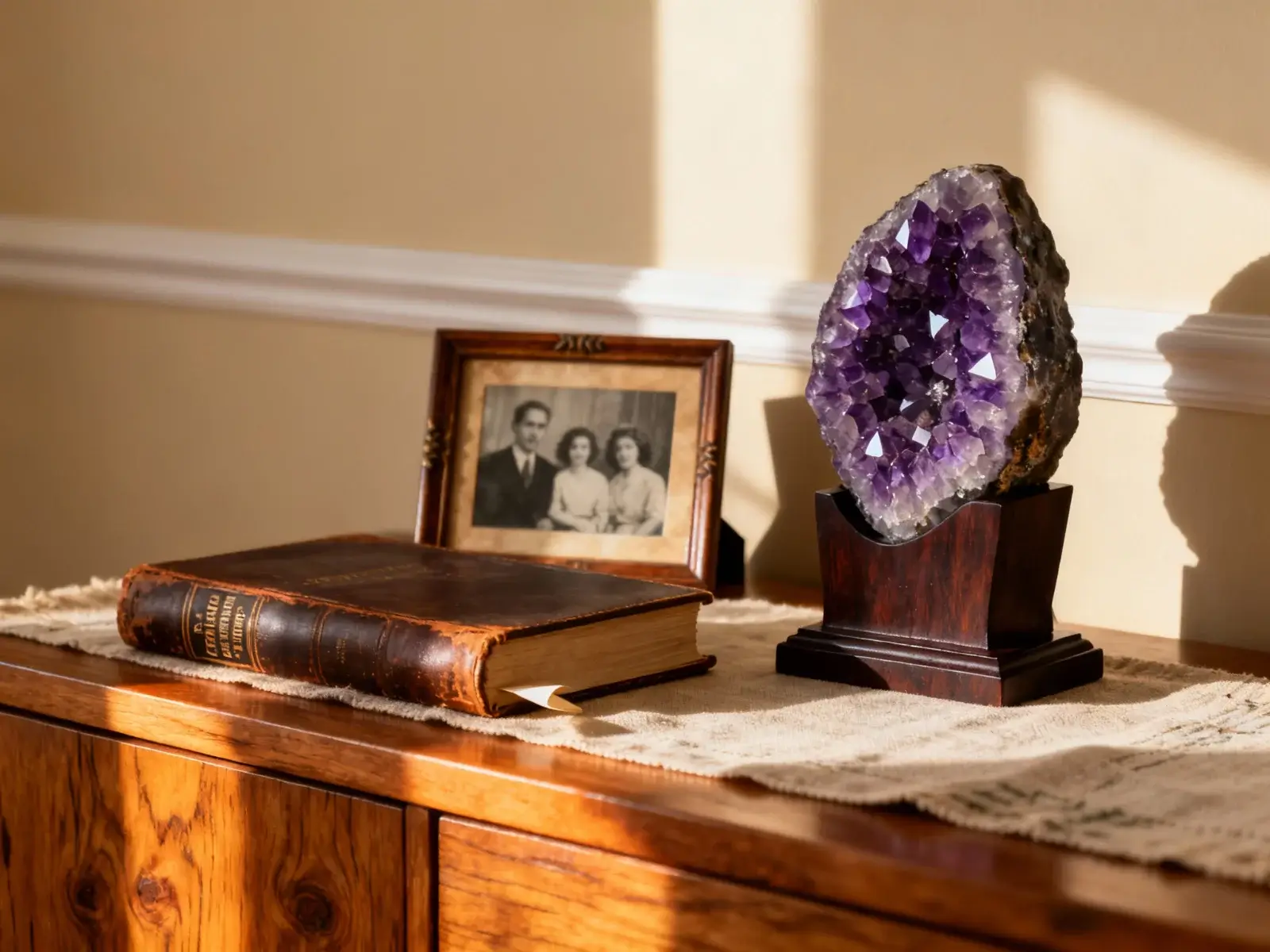
Fine minerals don’t fade. They don’t rust, chip under normal care, or go out of style. The geode in your living room today will look exactly the same in thirty years — and it will probably be worth more.
There’s a phrase I find genuinely accurate, not just poetic: when you own a fine amethyst, you’re a temporary custodian. The stone formed over tens of millions of years before it reached you. It’ll outlast everyone in your family by several million more. For the practical purpose of passing something meaningful to the next generation, that kind of permanence is unusual.
They are, in that sense, the ultimate heirloom. For keeping the piece in pristine condition, our Amethyst Care guide covers everything practical.
The Saluxe Standard
This is the work Saluxe was built around. A market full of commercial-grade stones dressed up as exceptional ones requires a curator — someone who visits the suppliers, handles the pieces, and rejects what doesn’t meet the standard.
Every specimen in our collection has been personally selected for deep colour saturation and structural integrity. Not because that makes a good pitch, but because those are the only two things that actually matter when the piece is standing in your home a decade from now.
