




Stories
Unlocking the Quiet Power of Your Amethyst

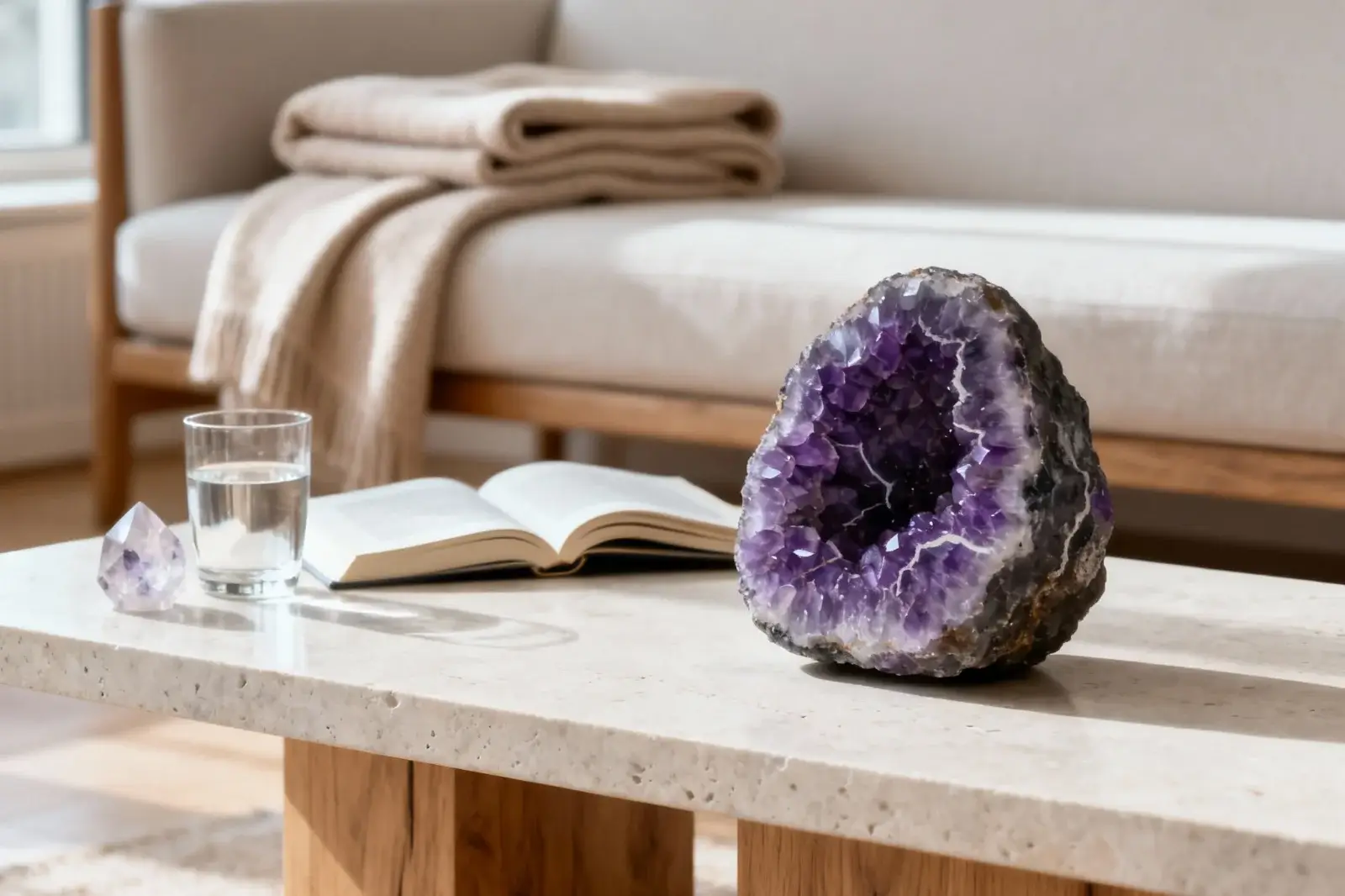
The first customer who asked me about amethyst’s “energy” said it almost apologetically, like she expected me to laugh. I didn’t. I’d spent enough time with these stones — holding them, placing them, watching how people respond when they walk into a room that has one — to know something shifts. Whether that’s geological, psychological, or something harder to name, I honestly can’t say for certain.
But the effect is old. And consistent. That’s worth paying attention to.
A History of Clarity
Amethyst’s reputation as a stone of the mind isn’t accidental. Its name comes from the Greek amethystos — “not intoxicated.” Ancient nobility believed it protected against excess, though the application went well beyond wine. High priests wore it. Scholars kept it close. It was treated as a talisman for sobriety of thought — a way to cut through illusions, quiet a temperamental mind, and stay open to whatever insight was trying to get through.
We’re not guarding against poisoned chalices today. But scattered attention, low-grade anxiety, the kind of mental fog that settles in by mid-afternoon — that’s not so different, really.
The Core Qualities: Why We Are Drawn to It
Beyond its geology, amethyst is celebrated in metaphysical circles for three distinct qualities that tend to resonate with people who work with it seriously:
- The Visual Exhale (Calm): There’s something about looking into the interior of a geode — the way the crystals go back and back, layer after layer — that pulls your attention out of whatever loop it was stuck in. I’ve watched people stop mid-sentence to look at one. It’s not magic. But it works.
- Energetic Boundaries (Protection): Many people place amethyst in entryways or workspaces with a specific intention: to filter what comes in. The idea is that the stone transmutes heavy or anxious energy into something calmer. I can’t prove that. But I’ve noticed that rooms with a prominent amethyst feel different from rooms without one — and I’m not the only person who’s said so.
- Intuition Over Logic: Amethyst is consistently associated with the quieter voice — the one that gets drowned out by data, deadlines, and second-guessing. People who work creatively often keep one nearby. Not as a superstition, but as a reminder to slow down enough to actually think.
3 Simple Ways to Incorporate Its Energy
You don’t need elaborate rituals to benefit from the stone’s presence. Here is how to weave its energy into a contemporary lifestyle:
- The “Desk Anchor”
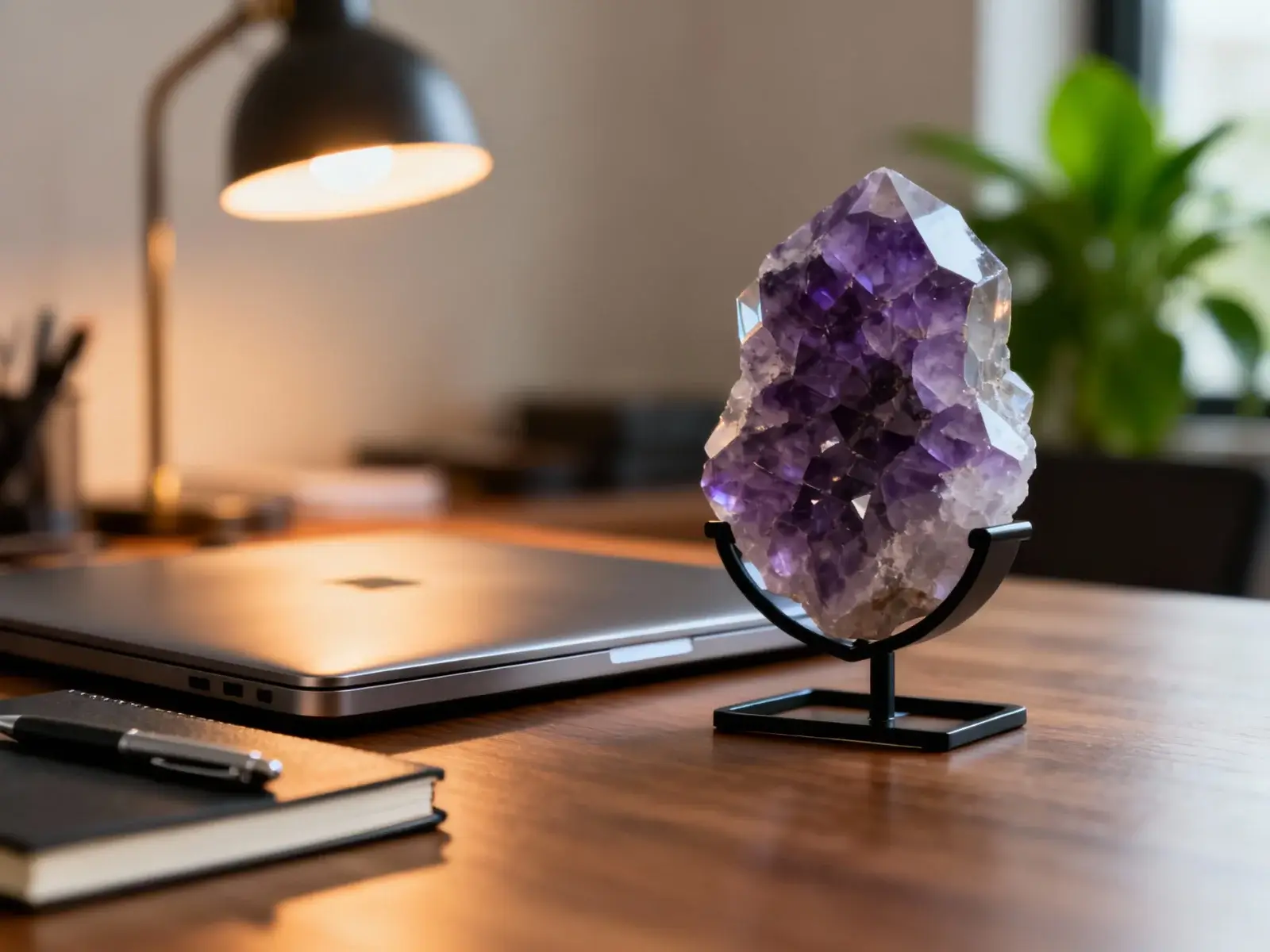
Work is where most of us feel the most overwhelmed, and the desk is usually the epicentre of that. An amethyst on a stand near your monitor does something simple: it gives you somewhere to look that isn’t a screen. A stone, a deep purple, something that took millions of years to form. It puts the deadline in perspective. Not magically — but practically.
- The Bedside Sentry
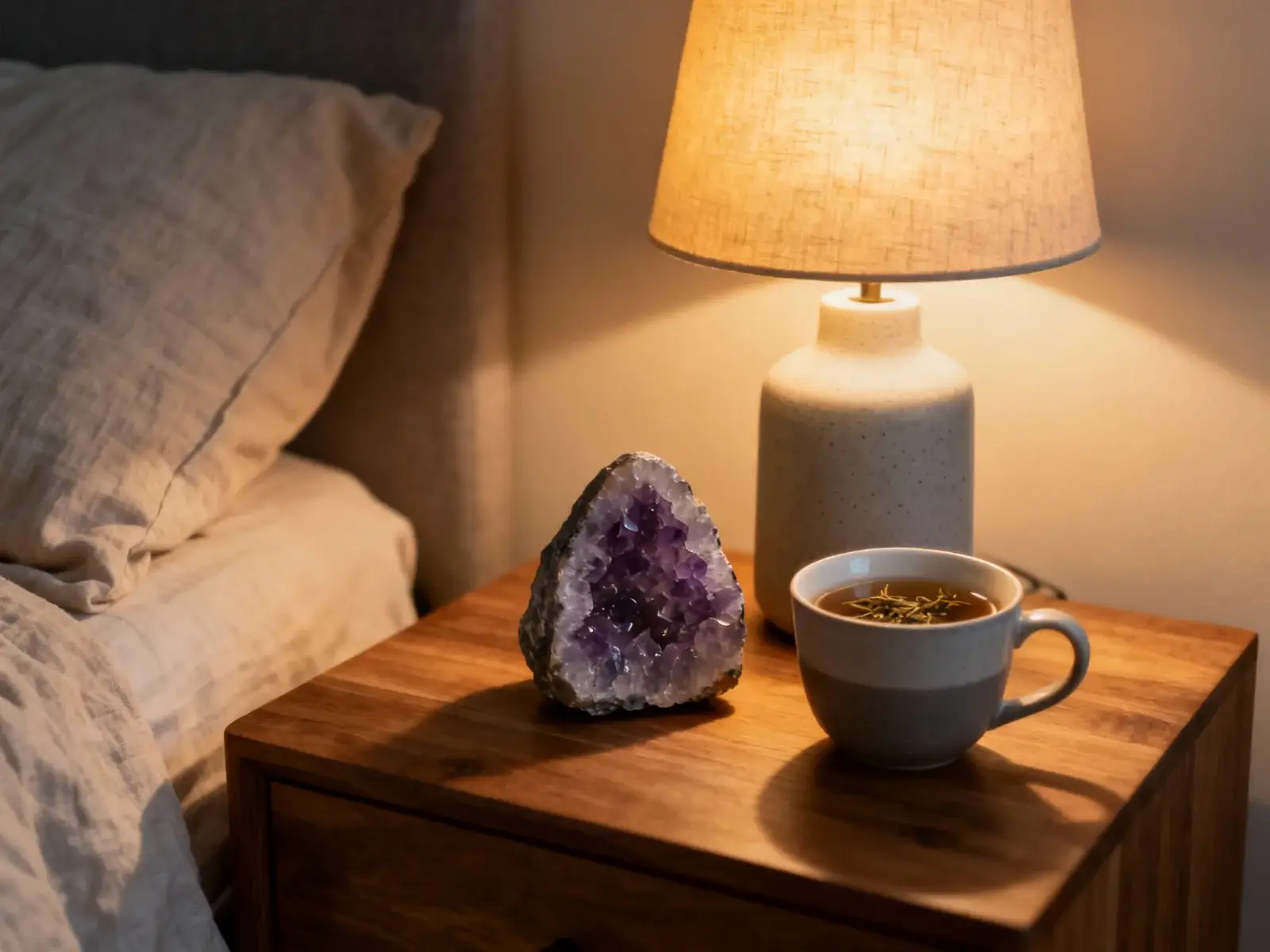
Racing thoughts at midnight are a specific kind of misery, and most people have their own rituals for managing them. Some keep a notebook. Some read. A smaller geode on the nightstand is an old recommendation — its energy is considered gentler than clear quartz (which carries more of a high-frequency buzz), making it well-suited to a space meant for rest.
- The Meditative Pause
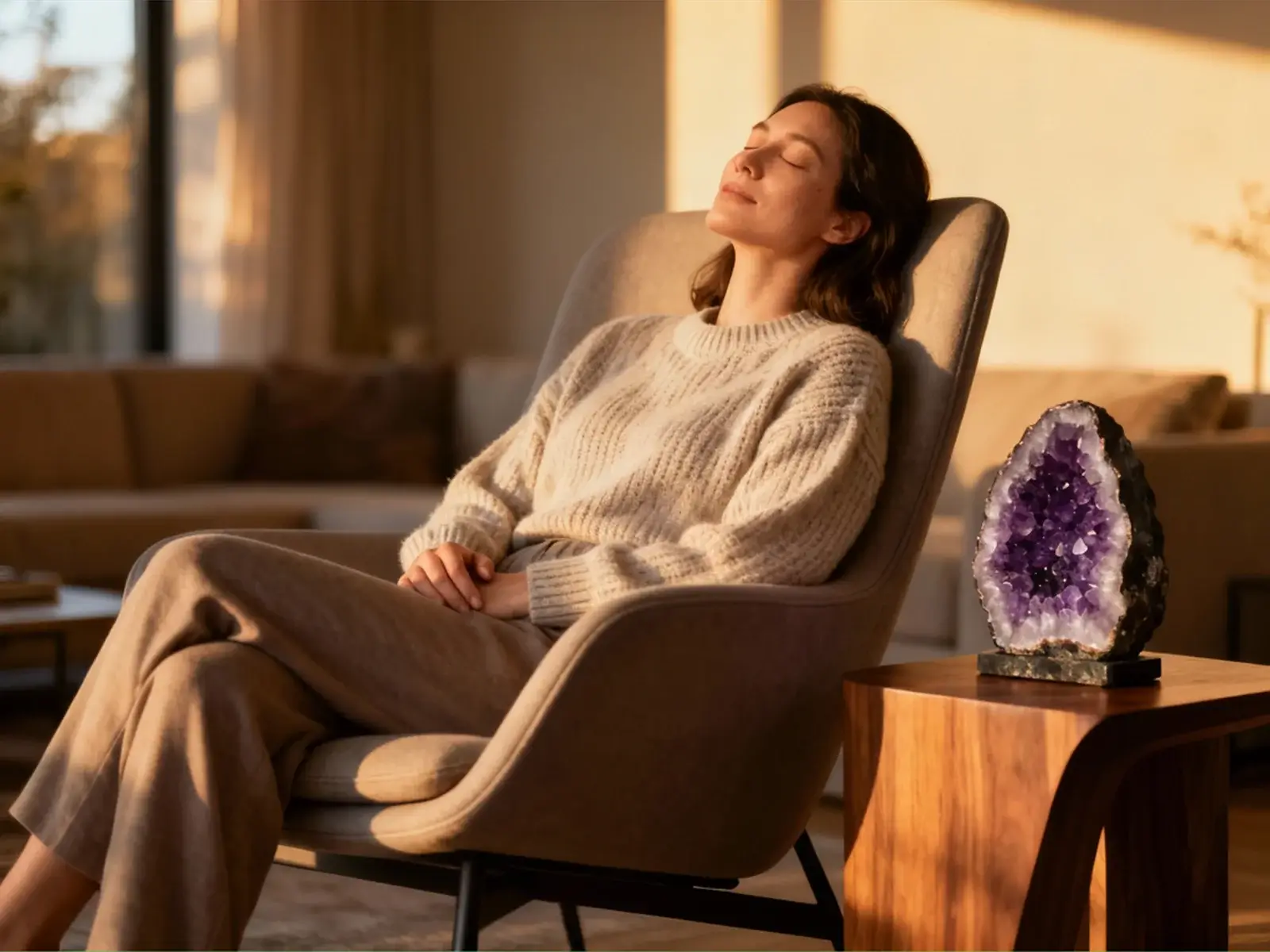
You don’t need a practice or a tradition to do this. Sit somewhere quiet, hold a small polished stone or settle near a larger geode, and close your eyes for five minutes. Nothing elaborate. Just silence and the stone. I find it useful after long calls, or before something I need to think clearly about. It resets something.
Finding Your Perfect Piece
When choosing an amethyst for spiritual or emotional support, trust what draws you. There’s no wrong answer, but there are a few practical distinctions worth knowing:
- Geodes: The open, cave-like formations are considered the most outwardly radiating — good for changing the feel of an entire room. Living rooms, bedrooms, meditation corners. They hold a lot of presence.
- Amethyst on a Stand: Placing a piece on a stand changes how light moves through it. Different times of day, different angles — the colour shifts in ways that are genuinely hard to predict. Good for a desk, a shelf, or anywhere you want a focal point that earns its place.
- Polished Stones: Less dramatic than a geode, but more personal. Small enough to hold, carry, or keep in a pocket. A good choice if you want something tactile rather than decorative.
A Final Thought
Bringing a crystal into your home is a small decision with a surprisingly long reach. You’ll see it every day. You’ll reach for it without thinking. And at some point — I can’t tell you exactly when — you might notice that the room feels different, or that you feel different in it.
That might be the stone. It might be you. Probably it’s both. Our curated selection of geodes and statement pieces is here when you’re ready to look.
Editorial Note — To bring our stories and concepts to life, some images are occasionally artistically refined or digitally composed.
