




Stories
What Makes Amethyst So Special? Understanding Its Unique Appeal

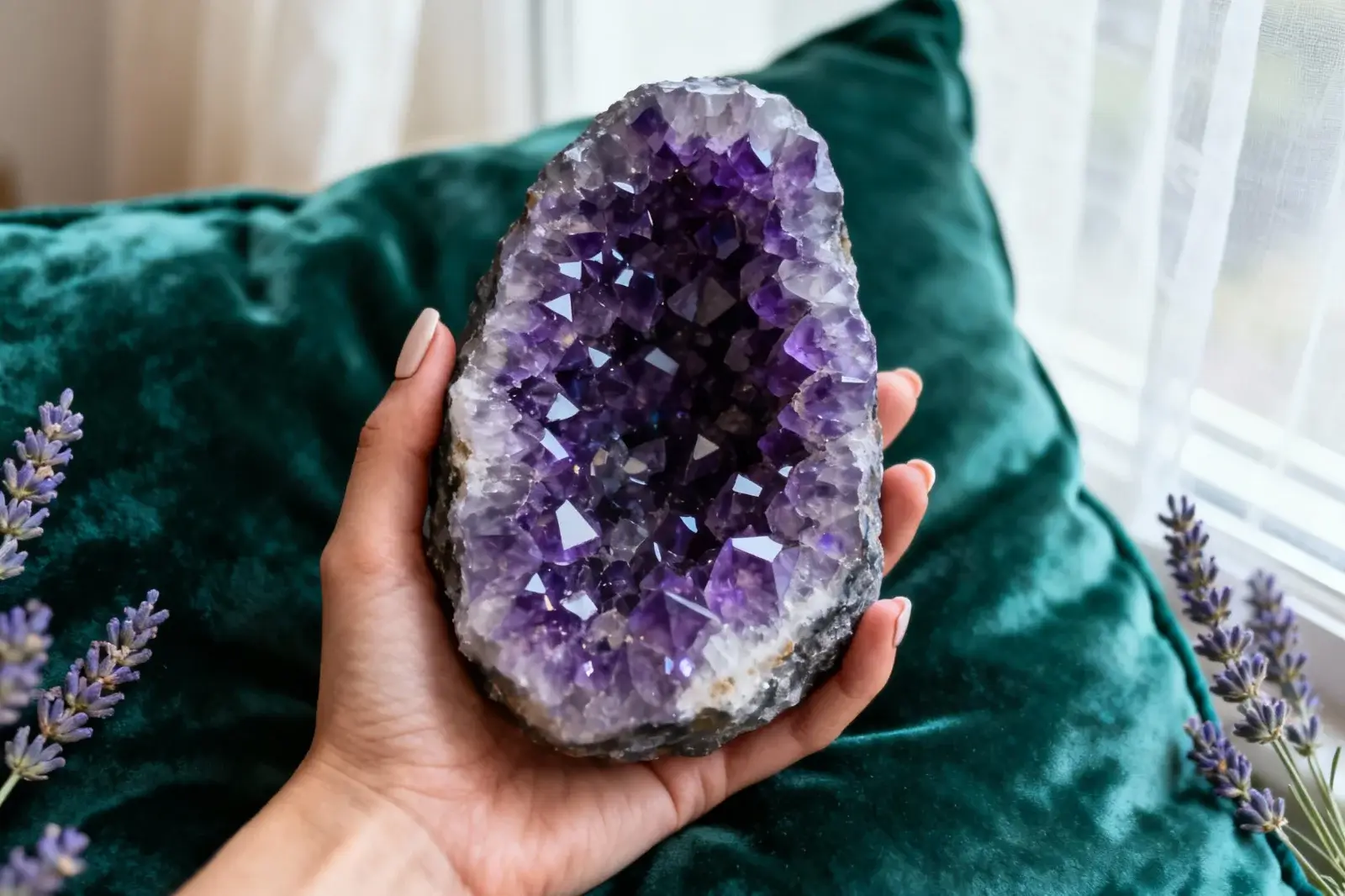
It’s a harder question to answer than it looks. Not because amethyst lacks qualities worth naming, but because the combination is unusual — colour, geology, history, and the way it behaves in a room all converging in a single object. Most things only have one or two of those.
Here’s a closer look at what makes amethyst truly unique.
Its Signature Shades of Purple
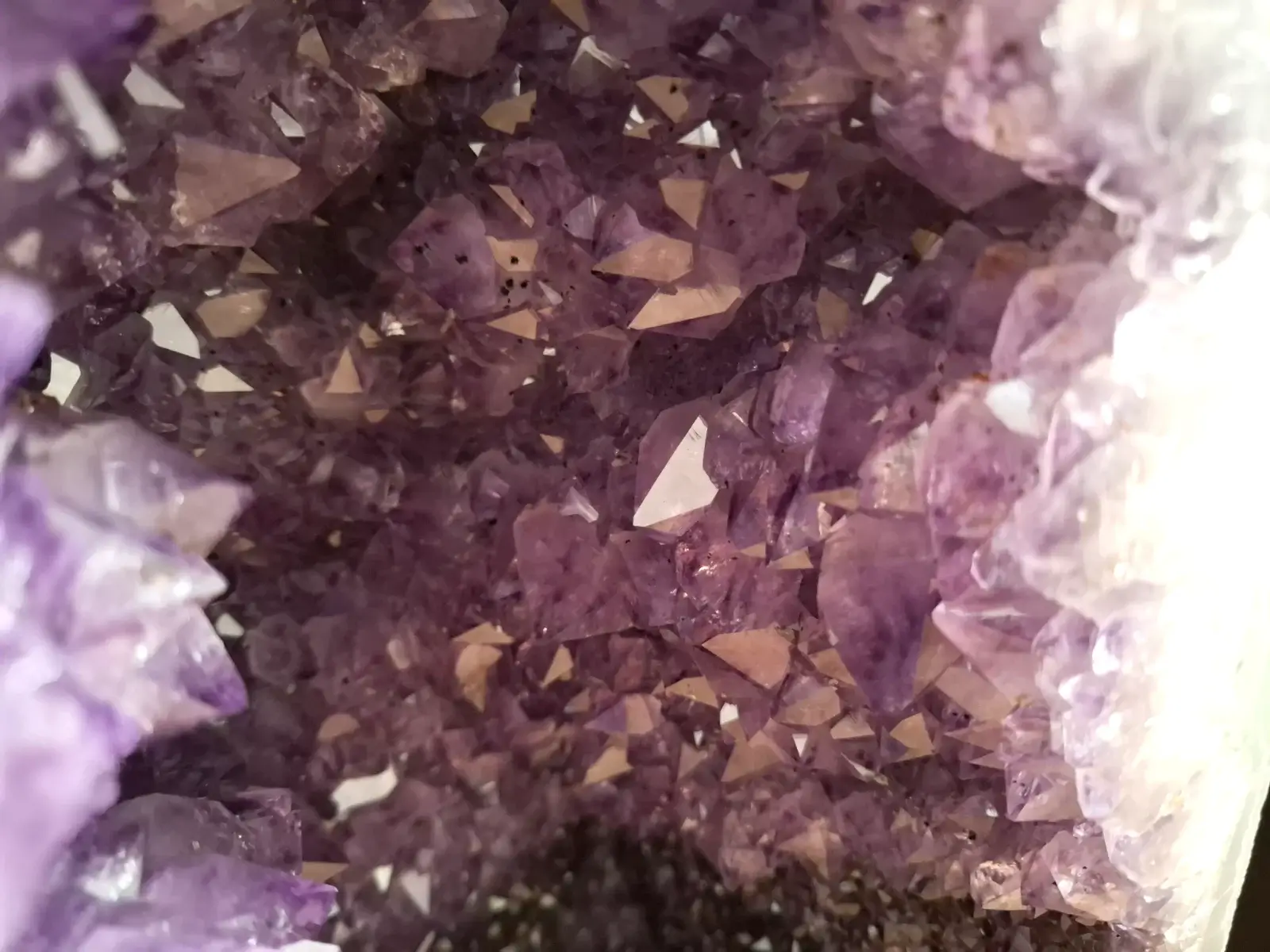
Purple is the first thing you notice, and it’s worth paying attention to. The range is wider than most people expect — from pale, almost grey lavender to a saturated violet that borders on black in low light. What produces that variation is iron content and the speed at which the crystal cooled inside the rock. Neither of those things can be controlled, which is why the colour of each piece is genuinely its own.
And unlike many gemstones, amethyst doesn’t need treatment to look the way it does. What you see is what formed, over millions of years, without any intervention.
A Stone Shaped by History and Tradition
Amethyst has been valued for a long time — and not just for its appearance. The Greeks associated it with clarity of mind. Egyptians used it in burial objects as protection. Medieval clergy wore it as a mark of office. The specific meanings shifted from culture to culture, but the sense that the stone carried something persisted consistently across all of them.
I find that continuity interesting. It’s not superstition — it’s a pattern worth noticing. Whatever quality people responded to in amethyst three thousand years ago, they’re still responding to now. The history is long, and it adds a layer of meaning that most decorative objects simply don’t have.
Formed by Nature, Never Repeated
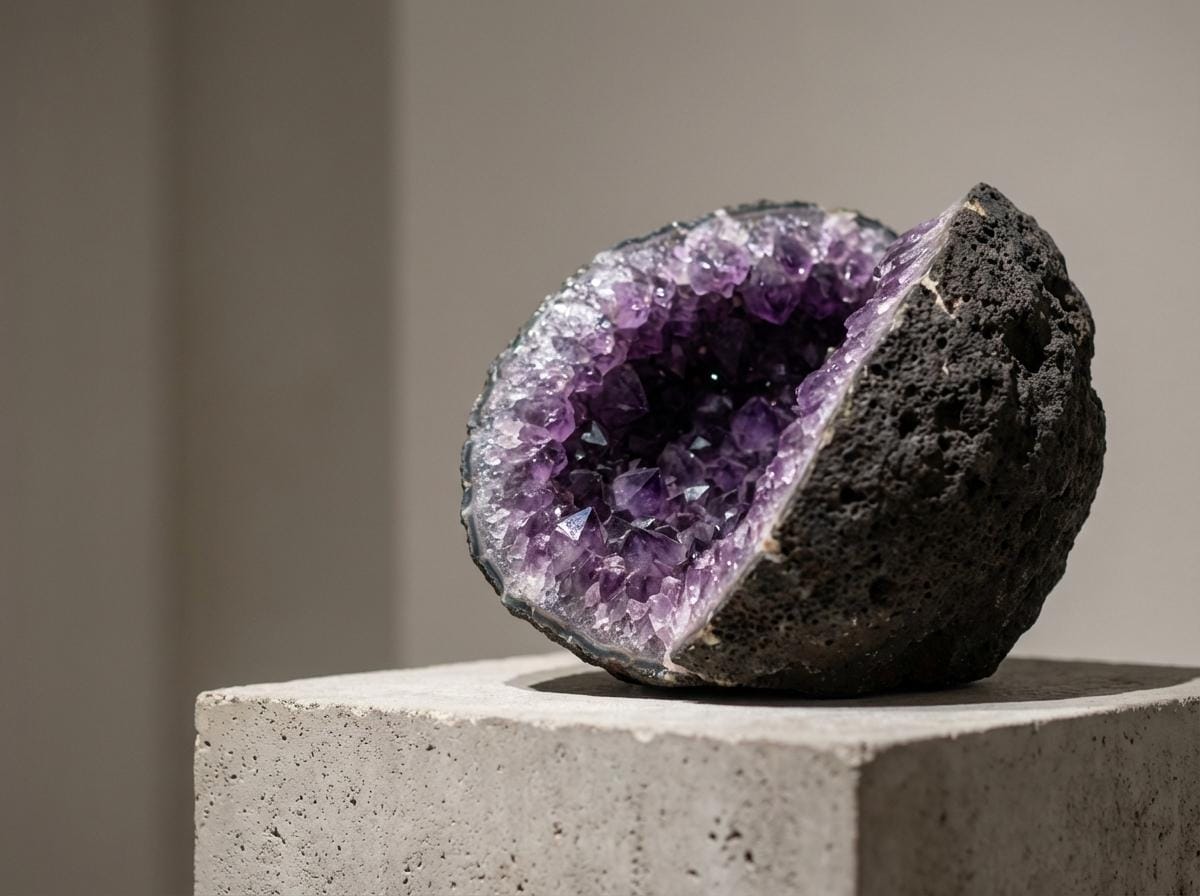
Each geode forms inside a cavity in volcanic basalt — a process that takes anywhere from 1 to 10 million years depending on the conditions. Silica-rich groundwater moves through the rock, deposits minerals layer by layer, and eventually produces the crystal formations you see when the geode is opened. The temperature, the mineral content, the rate of cooling: none of it is predictable, and none of it repeats exactly.
Two pieces from the same mine, extracted the same week, can look entirely different. That’s not a selling point I invented. It’s geology.
Beautiful in Any Space or Setting
Amethyst works across a wider range of contexts than most natural objects. Part of that is the colour — purple sits at the edge of warm and cool, which means it doesn’t fight with other tones the way some statement pieces do. Part of it is scale: you can find pieces from pocket-sized clusters to cathedrals over a metre tall, each one suited to a different kind of space.
- In décor: Geodes and cathedrals hold their own as focal points without needing anything around them.
- As gifts: One of the few objects that works as a meaningful present for almost any occasion — and keeps its value over time.
- In jewellery: Polished stones carry the colour well; amethyst has been set in fine jewellery for centuries for good reason.
- In personal spaces: On a desk, a bedside table, a reading corner — it adds something that’s hard to name but easy to notice when it’s there.
A Sense of Calm and Balance
People consistently describe amethyst as calming. I’ve heard this enough times — from people with no interest in crystal energy, from designers, from buyers who came for the aesthetics and stayed for the atmosphere — that I’ve stopped treating it as coincidence.
Whether that’s the colour, the association with stillness built up over centuries, or something else, I can’t say with certainty. But it’s real enough that it’s worth mentioning. Rooms with a prominent amethyst feel different from rooms without one. There are reasons for that, and most of them don’t require any particular belief system.
Ethically Sourced, Meaningfully Chosen
Where a stone comes from matters — both for practical reasons and because provenance is part of what gives it value. At Saluxe, we source from suppliers we know, whose operations we can account for. That transparency is something we take seriously. A piece of amethyst that’s been extracted responsibly and handled with care is a different object, in a meaningful sense, from one that hasn’t.
Discover Amethyst for Yourself
Photographs capture the colour reasonably well. They don’t capture the weight, the texture, the way the crystals catch light from different angles, or the particular effect a large piece has on the feel of a room. Those things only come through in person.
If you’re considering a piece, our full collection is photographed as it actually is — no retouching, no artificial light. It’s the closest thing to seeing it yourself without being here. And if you’d like more photos or a video of a specific piece before deciding, just get in touch — we’re happy to arrange that.
Editorial Note — To bring our stories and concepts to life, some images are occasionally artistically refined or digitally composed.
